PFAS and PPE: Reducing Exposure for Firefighters & First Responders
Kappler Addresses Growing Concern
As a leading innovator and manufacturer of protective clothing for chemical, biological and thermal hazards, Kappler is focused on solutions to reduce PFAS exposure among firefighters. PFAS has become a complex topic as firefighters seek to reduce exposure to suspected carcinogens, with an increased focus on contaminated turnout gear as a potential hazard itself.

96% of fire department calls are not structural fires.
A 2022 NFPA study shows structure fires average only 4% of fire department calls. This finding has led to discussion about the remaining 96% of calls where other types of PPE might provide appropriate turnout gear alternatives.
As critical PPE for structure fire response, turnout gear can contain and become contaminated with PFAS. This puts wearers at risk of long-term, repetitive exposure to these potentially carcinogenic compounds.
All Kappler protective garments are documented with clear, transparent statements addressing whether PFAS are found in a given suit or suit configuration. As fire professionals seek to better understand the options for reducing PFAS exposure, Kappler is committed to providing effective alternatives when turnout gear may not be the ideal response apparel.
Kappler’s Technical Statement below provides insights into the topic of PFAS. User education is paramount to Kappler, and that’s why we always remind protective clothing wearers to know what they’re getting into.
PFAS and PPE
What it means to the end user
(Revision 12/2024)
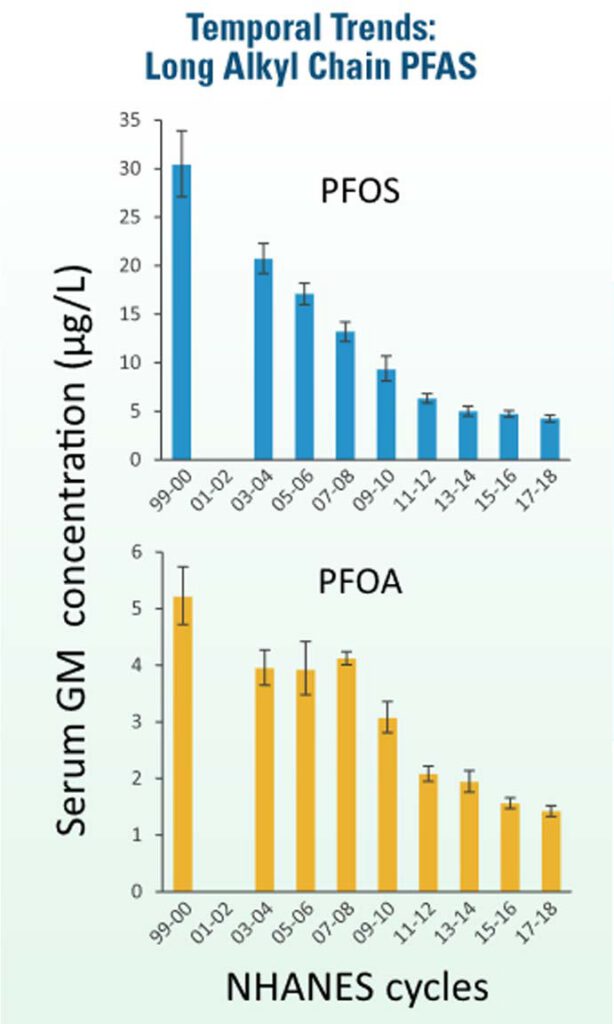
PFAS are a group of over 15,000 chemicals, per- and polyfluoroalkyl substances. PFAS are found in a variety of materials from carpets to cosmetics. Because of their widespread use and their persistency, PFAS can be found in the blood of people and animals all over the world and can be present at low levels in some food products as well as the environment. However, with increased regulation, research has shown a sharp decline in certain PFAS levels over the past 20 years.
How PFAS Enter The Body
People are most likely exposed to these chemicals by consuming PFAS-contaminated water or food, using products meant to absorb in their skin made with PFAS, or breathing air containing PFAS. As dermal exposure has a low absorption rate, most exposure is from either ingestion or inhalation. At the time of this publication, the ACGIH has determined Threshold Limit Values for only 3 of the 15,000 chemicals in this family, and this data is for inhalation only.
PFAS in PPE
PFAS also are commonly used in firefighting turnout gear because of their ability to dissipate heat and their water resistance properties. Ongoing research is being completed by the CDC as well as other agencies to evaluate the long-term health effects of these chemicals versus the abundance of other potential toxins that are encountered on a regular basis by these responders.
Kappler Products
Here at Kappler we are committed to bringing the best products to our customers. Although PFAS are present in the outer layer of our gas tight visor system as well as our Durachem® 200, neither material contains PFOA or PFOS. This specificity is important, as these are the two PFAS compounds of greatest concern. A significant note is that these products do not have sustained contact with the wearer’s skin. Additionally, all Provent® and Zytron® fabrics, as well as Durachem 500 products, do not contain PFAS.
While studies are still limited, research and development are ongoing for PFAS compounds and their future uses. With this in mind, every effort must still be made to compare risk versus reward. Kappler will continue to monitor research on PFAS chemistry and update this document as more information becomes available.